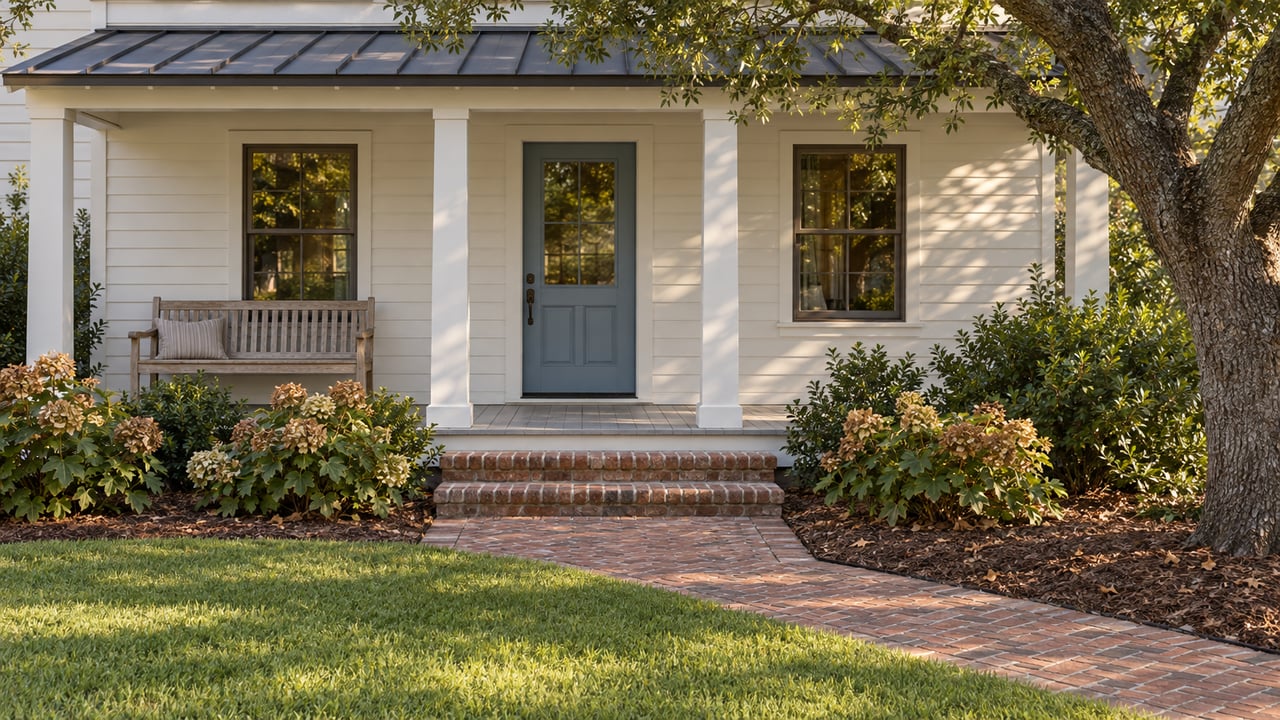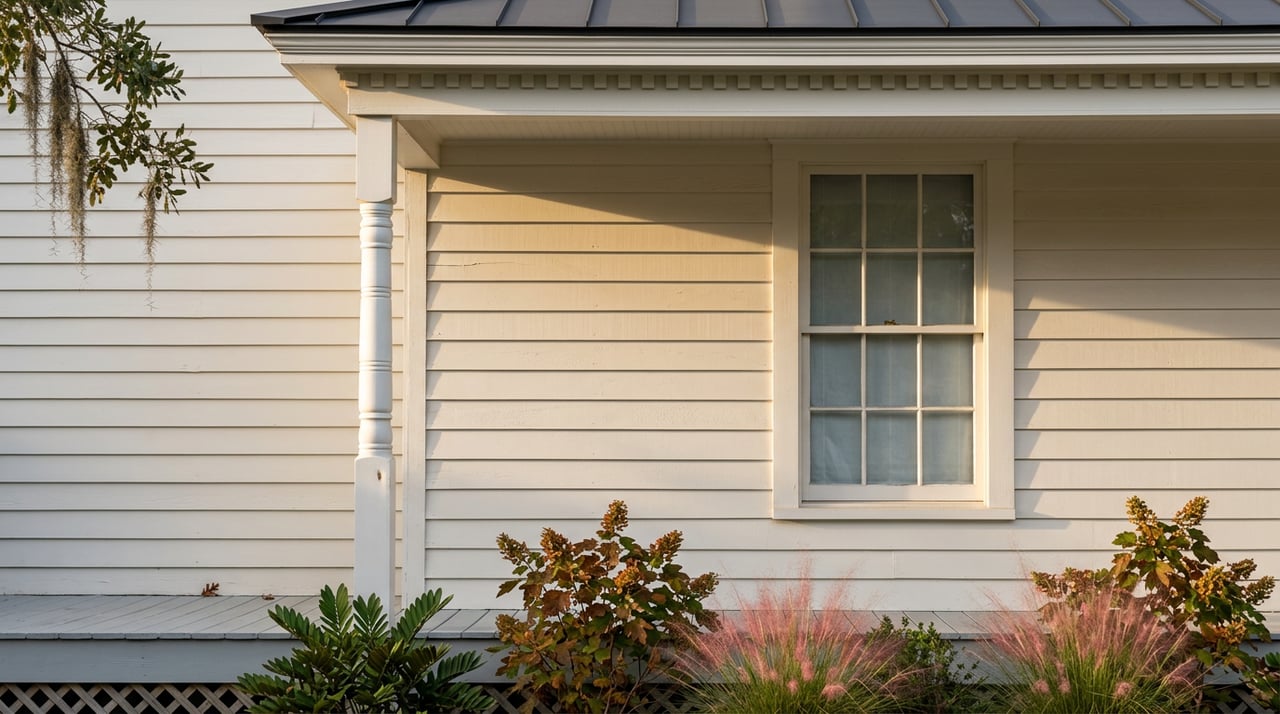
You are under contract on a home inside the fifty-block district that runs from the Amelia River east through Old Town and Downtown. The listing photos showed original clapboards, tall single-pane windows, and a low-slope porch roof that reads as pure 1890s. Your lender wants a bindable insurance quote in ten days. Your future self wants to eventually swap the windows for something that closes tight in August. Those two wants are already in tension, and the closing table is where the tension gets priced.
Most guides to this district describe it as a lifestyle question. It is really a governance question. Two separate review bodies will hold opinions about your house for as long as you own it, and their priorities point in opposite directions. Understanding that split before you sign the closing package is the single piece of local knowledge that changes the transaction.
The Two Reviews That Decide the House
The first review is preservation. Any exterior work on a home inside a locally designated historic district requires a Certificate of Appropriateness before the city will issue a building permit, and the Historic District Council administers that review under the U.S. Secretary of the Interior's Standards for Rehabilitation. The HDC meets the third Thursday of each month at 5:00 p.m. in City Hall Chambers at 204 Ash Street. Old Town, Downtown, and the Community Redevelopment Area each carry their own design guidelines, and staff can approve minor items without a hearing while larger scopes go to the full council.
The second review is insurance underwriting. Coastal Nassau County sits inside Florida's 130 to 140 mph wind zone, and carriers price the documented age of your roof, the wind mitigation features on the OIR-B1-1802 form, and the age and material of the openings. On a barrier island the wind mitigation credits, roof shape, deck attachment, clips and straps, opening protection, are worth more than in almost any other market in the state.
The friction is this. The features that earn insurance credits, dimensional shingles under ten years old, hip roof geometry, impact-rated vinyl or aluminum windows, are frequently the features the HDC will not let you install on the street-facing elevation of a contributing structure. The features the HDC prefers, original wood windows with true divided lights, standing-seam metal, wood siding, are features that carriers may treat as underwriting concerns unless you document them properly.
What the HDC Says Yes and No To
The design guidelines are not a secret. They are published by the city and available through the Community Development Department. What matters at the transaction stage is the pattern of routine outcomes for common buyer scopes.
Typically approved on visible elevations:
- Wood or fiber-cement lap siding painted from the approved palette
- True divided-light wood windows, or interior storm inserts behind original sash
- Standing-seam metal roofing in period-appropriate profiles
- Brick or masonry foundation repairs matching original material
Typically denied on visible elevations:
- Vinyl siding and synthetic stone
- Modern one-over-one replacement windows in vinyl frames
- Freestanding ATMs, satellite dishes, and other reversible-only fixtures on street-facing walls
A property's status as contributing or non-contributing to the district determines how strictly these patterns apply. The city maintains an official inventory, and the label on your parcel is worth pulling before your inspection period closes, because a contributing designation narrows your window and door options materially.
One clause deserves attention because it surprises second-home buyers who plan to stage a slow renovation. Land Development Code Section 11.08.05 gives the HDC standing to flag a historic property that appears to be falling to demolition by neglect and to refer the matter to Code Enforcement. The district is not a museum, but deferred maintenance on a contributing structure is not a passive posture.
The Roof Question, Reframed
Sellers in the district often lead with the age of the roof. Buyers should ask a different question: does the roof have a permit and an OIR-B1-1802 form documenting it? Carriers write to the documented roof, not the year the house was built. A well-maintained 1905 Queen Anne with a permitted 2019 standing-seam metal roof and a current wind mitigation report can shop across more carriers than a 1998 mainland home with an undocumented reroof.
Ask the seller for the roof permit, the underlayment specification, and any wind mitigation inspection filed since installation. If none exists, budget $150 or so for a wind mitigation inspection during your due diligence period. On a coastal policy, wind mitigation credits can move a premium by twenty to forty-five percent, which is the kind of swing that changes what you can afford to bid on the next comparable listing.
The Insurance Squeeze, in One Data Point
Nassau County home insurance for a $300,000 dwelling generally runs between $2,200 and $3,400 a year, with coastal and older homes running above that band. The market that older homes shop into has been thinning and re-thickening at the same time. Citizens Property Insurance, the state-backed insurer that many barrier-island buyers have treated as a fallback, has been ceding Nassau policies back to private carriers at a striking pace. As of May 31, 2026, Citizens' Nassau County personal residential policy count sat at 549, down from 1,295 at year-end 2024, a decline of roughly fifty-eight percent in seventeen months.
The buyer's read on that number matters. It does not mean coverage is unavailable. It means the private market is quoting Nassau again, which rewards buyers who bring documented roof age, a current wind mitigation report, and a clean four-point inspection to the underwriting table. Buyers who bring none of that to a 1910 house tend to end up quoted last and priced worst.
Standard Florida homeowners forms cover wind as a peril, though a small share of policies are written wind-excluded. Confirm that yours is not before you bind. Hurricane deductibles are separate from the standard deductible and typically run two, five, or ten percent of dwelling coverage.
Flood Is a Separate Conversation
Flood is not covered by the homeowners policy. The district sits close to the Amelia River, and Hurricane Matthew in October 2016 pushed roughly six feet of storm surge into the waterfront. Pull the parcel's flood zone from the FEMA Map Service Center and request any existing elevation certificate from the seller. Private flood carriers frequently price below the NFIP for lower-risk parcels, but the elevation certificate is what makes the private quote possible.
A Pre-Closing Sequence That Respects Both Reviews
Order these during the inspection period, not after:
- Pull the parcel's contributing or non-contributing designation from the Community Development Department and, if you have a scope of work in mind, place a preliminary call to HDC staff at (904) 277-7325 to gauge whether it is a staff-level or hearing-level review.
- Request the roof permit, any prior wind mitigation report, and the four-point inspection from the seller. If any is missing, order it.
- Confirm the flood zone through the FEMA Map Service Center and request the elevation certificate.
- Shop the insurance quote with the wind mitigation report attached, and confirm the policy is not wind-excluded.
- Match your renovation wish list against the design guidelines for Old Town, Downtown, or the CRA, whichever applies. If the wish list depends on vinyl windows or vinyl siding on a street-facing elevation, revise the underwriting on the deal, not the guidelines.
The buyer who runs that sequence closes on a house they understand. The buyer who skips it closes on a house that will surprise them twice, once at the first insurance renewal and again the first time they file a Certificate of Appropriateness application.
FAQ
Can the HDC force me to restore the house to a specific period? No. The council does not require restoration, and existing conditions are not compelled to change. Section 11.08.05 addresses active deterioration, not aesthetic preferences.
Are interior renovations reviewed? Exterior work visible from a public right of way drives HDC review. Interior work is handled through the standard permitting process, subject to Florida Building Code requirements.
Does a contributing designation lower my property value? The designation constrains certain exterior choices and, in exchange, protects the character that most district buyers are paying for in the first place. The economic argument for preservation in Florida has been studied at the state level, and the district's walkability to Centre Street, the marina, and the riverfront is priced into the comps in a way that a non-district cottage cannot access.
The Fernandina Beach historic district rewards buyers who treat it as a system rather than a style. If you are working through a contract on a contributing structure or weighing a home in Old Town against a newer build on the south end of the island, Daniel Hulett can walk the parcel with you and coordinate the pre-closing sequence with the vendors who file these reports every week. Let's Connect.